Wet Wipes Ban Coming in UK: What Cosmetic Brands Need to Know
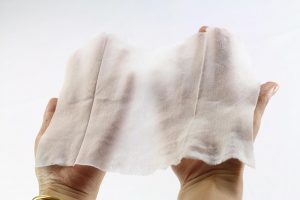 A major regulatory shift is underway for cosmetic brands selling wet wipes, pre‑wetted sheet masks, or facial cloths anywhere in the UK. All four UK nations have now confirmed or announced legislation banning plastic‑containing wet wipes, with transition periods running into 2026–2027.
If your product range includes any pre‑wetted non‑woven items, now is the time to prepare.
What Counts as a “Wet Wipe”?
Across the UK, a wet wipe is consistently defined as:
A non‑woven piece of fabric that has been pre‑wetted and is not designed or intended to be reused.
This definition includes:
- Pre‑wetted sheet masks
- Pre‑wetted face masks
- Facial cleansing wipes
- Any similar non‑woven cosmetic wipe products
Products containing plastic fibres—such as polyester, polypropylene, PLA, PHA, or bio‑based polymers—will fall under the bans.
Nation-by-Nation Overview
| Country | Date Adopted | Entry into Force | Regulation |
| Wales | 18 June 2025 | 18 December 2026 | The Environmental Protection (Single-use Plastic Products) (Wet Wipes) (Wales) Regulations 2025 which amends The Environmental Protection (Single-use Plastic Products) (Wales) Act 2023 |
| England | 18 November 2025 | 19 May 2027 | The Environmental Protection (Wet Wipes Containing Plastic) (England) Regulations 2025 |
| Northern Ireland | 18 November 2025 | 18 May 2027 | The Environmental Protection (Wet Wipes Containing Plastic) Regulations (Northern Ireland) 2025 |
| Scotland | 10 February 2026 | 11 August 2027 | The Environmental Protection (Wet Wipes Containing Plastic) (Scotland) Regulations 2026 |
The definitions differ slightly in Wales compared to the other nations, but overall the scope is the same.
There are some exemptions such as for medical care or treatment, business-to-business
What Cosmetic Brands Should Do Now
- Audit Your Product Range
Identify all products that use pre‑wetted non‑woven materials.
Even wipes marketed as “biodegradable” may still contain plastic fibres such as:
- Polyester
- Polypropylene
- PLA or PHA bioplastics
Request full material specifications from your suppliers.
- Switch to Plastic-Free Substrates
Approved alternatives include:
- Cotton
- Bamboo
- Viscose or cellulose (verify manufacturing processes)
Ensure no synthetic or polymeric fibres are present.
- Update Your Compliance Documentation
Any change in wipe material or preservative system may require updates to:
- PIF (Product Information File)
- CPSR (Cosmetic Product Safety Report)
Should You Act Now?
Yes—waiting is risky.
With every UK nation either having adopted similar bans, it is far more efficient to:
- Switch to plastic-free wipes across all markets now, and
- Update your compliance documents once, rather than nation by nation.
This avoids reformulation delays, supply chain disruption, and wasted inventory.
About the Author

Geraldine Garrs is a member of the Royal Society of Chemistry, CTPA, British Toxicology Society and the Society of Cosmetic Scientists. Geraldine is an independent Cosmetic Safety Assessor and Chartered Chemist with over nine years of experience helping more than 700 brands ensure their cosmetic products are safe and compliant. She specialises in preparing Cosmetic Product Safety Reports (CPSRs) for UK and EU. Geraldine is passionate about supporting small cosmetic businesses and simplifying complex regulations. Learn more at www.generalcosmeticsafety.co.uk
Get in Touch
If you’d like to discuss any of your products or ranges, please use the contact form here.
Qualifications: CChem (Royal Society of Chemistry). MSc (Distinction), University of Strathclyde, BSc (Hons) Chemistry, University of Nottingham and Certificate – Safety Assessment of Cosmetics in the EU, Vrije University Brussels